 +1 510 331 6699
 info@classicaltransportation.com

May
Medical courier vs standard courier: what is the difference?

"Choosing a standard courier for a medical delivery is not just a service quality issue - it is a compliance and patient safety issue. The two categories of service are not interchangeable."
What a standard courier is designed to do
Standard courier services are built around efficiency and volume. The goal is to move as many packages as possible through a defined route in the shortest available time. This model works very well for a wide range of commercial deliveries - documents, retail goods, office supplies, parts, and general freight where the primary requirement is that the item arrives intact and on time.
Standard courier companies invest in route optimisation, package tracking, and driver availability. They are not typically structured around regulated cargo handling, chain-of-custody documentation, specialised training for biological materials, or compliance with healthcare privacy laws. They do not need to be - for the vast majority of what they carry, none of that is relevant.
What a medical courier is designed to do
A medical courier exists to solve a fundamentally different problem. The cargo has specific requirements that standard delivery cannot reliably meet, and the consequences of failure are not just commercial - they affect patient care. Medical couriers are structured around the following capabilities:
Chain-of-custody documentation
Every medical shipment should generate a verifiable record of who had possession of the item at every stage of transit - pickup, transport, and delivery with recipient confirmation. This documentation protects the sender, the recipient, and the patient. It is a standard requirement for laboratory specimens, pharmaceutical deliveries, and any cargo moving within a regulated healthcare environment.
A standard courier provides delivery confirmation. A medical courier provides chain-of-custody documentation. These are not the same thing.
Training for biological and medical cargo
Drivers handling laboratory specimens, blood products, biohazardous materials, and pharmaceutical cargo require specific training. This includes understanding proper containment, what to do if a specimen container is compromised in transit, temperature requirements for different cargo types, and how to handle materials that fall under IATA DGR (Dangerous Goods Regulations) for biological substances.
A standard courier driver is trained to handle packages carefully and deliver them on time. A medical courier driver is trained to handle specific cargo categories that require regulated handling procedures.
HIPAA awareness
Any courier transporting patient records, laboratory reports, insurance documents, or other protected health information is operating in a HIPAA-regulated environment. This does not mean a courier needs to be a healthcare compliance specialist, but it does mean they need to understand the basic obligations around handling PHI and the consequences of mishandling it.
Medical courier companies train their staff on HIPAA basics as a matter of standard operating procedure. This is not typically part of standard courier training.
Temperature-controlled transport capability
Vaccines, blood products, certain pharmaceuticals, and biological research materials all have temperature requirements. Some need refrigeration between 2 and 8 degrees Celsius. Some need to be kept at room temperature. Some require frozen transport. A failure in temperature control during transit can render the cargo useless - and for vaccines or medications scheduled for patient use, a temperature excursion is a serious problem.
Standard couriers are not equipped for temperature-controlled medical cargo. Medical couriers maintain appropriate vehicles, validated containers, and temperature logging capability for shipments where the cold chain matters.
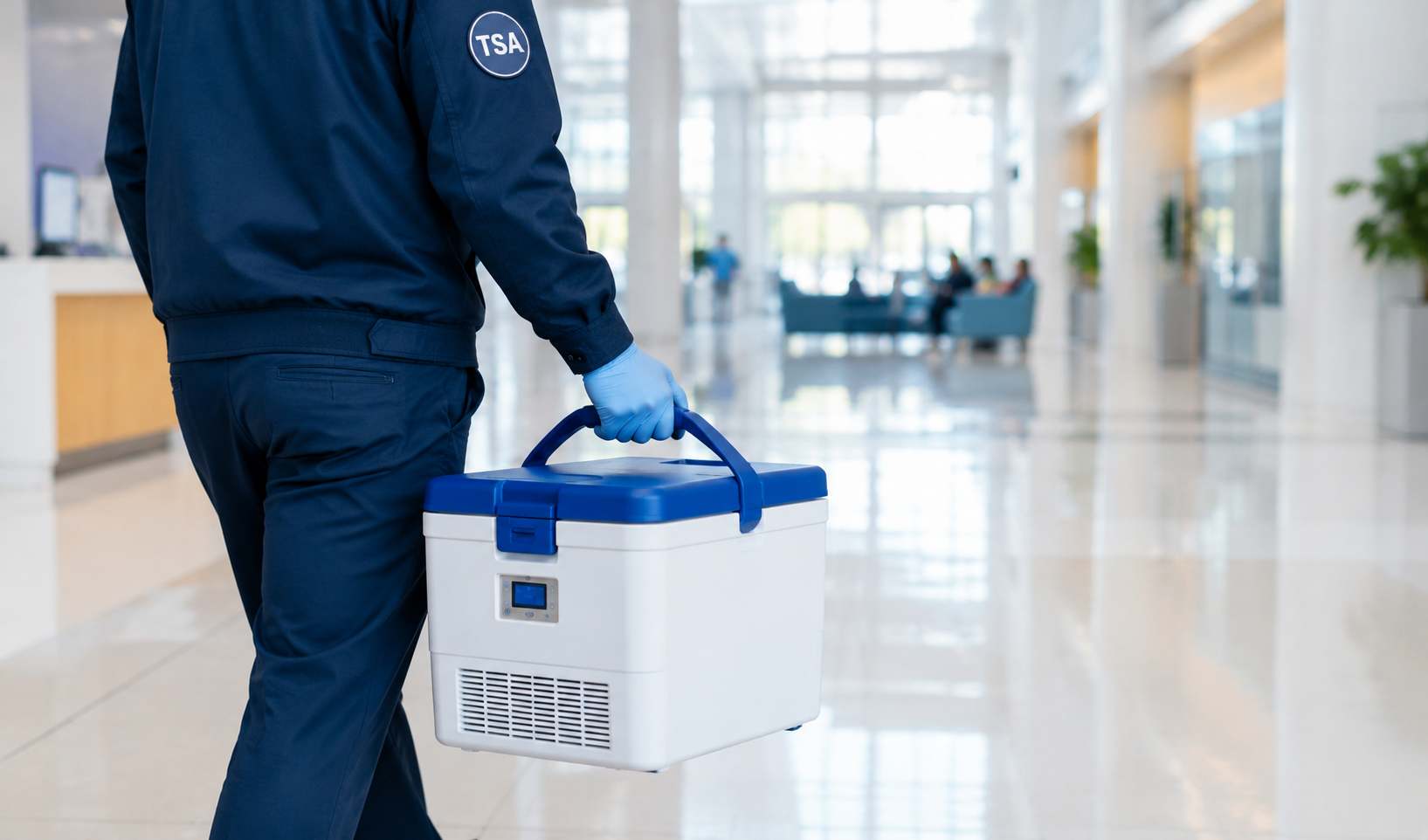
TSA certification for airport-connected deliveries
In the San Francisco Bay Area, a meaningful percentage of medical and pharmaceutical deliveries involve airport connections - incoming shipments from other cities, organ transport, air freight connections for time-critical cargo. When a delivery needs to move through or connect with an airport cargo facility, the courier's drivers need to be TSA-certified.
TSA certification allows drivers to enter and work within airside facilities at SFO, OAK, SJC, LAX, and other airports. Classical Transportation maintains TSA certification across our driver team, which means we can handle the full logistics chain for deliveries that touch airport infrastructure.
24/7 availability and stat response
Medical emergencies do not follow business hours. Specimen pickups, emergency pharmaceutical deliveries, and organ transport all happen around the clock. A medical courier needs to operate on the same schedule as the healthcare facilities it serves - which means 24 hours a day, every day of the year, with a live dispatcher reachable by phone rather than an automated system.
Standard courier companies typically operate on business hours with limited after-hours availability. Their operations model is not built for the kind of immediate response that medical logistics sometimes requires.
The practical difference for healthcare facilities
For a hospital, laboratory, clinic, or pharmacy managing their logistics, the choice between a standard courier and a medical courier comes down to risk. The scenarios where the difference matters most include:
When a standard courier is the right choice
To be clear - standard couriers are the right choice for a large proportion of healthcare facility deliveries. Office supplies, furniture, non-sensitive documents, laundry, catering supplies, and general goods moving in and out of a hospital or clinic do not need medical courier handling. Using a medical courier for everything would be unnecessarily expensive and operationally impractical.
The key is matching the delivery type to the appropriate service. A clear policy about which categories of shipment require a medical courier and which can go via standard courier is worth establishing if you have not done so already.
Classical Transportation - medical courier services in the Bay Area
Classical Transportation provides dedicated medical courier services to healthcare facilities, laboratories, clinics, pharmacies, and biotech companies across the San Francisco Bay Area. Our team includes TSA-certified drivers trained for medical logistics, with 24/7 dispatch and chain-of-custody documentation as standard on every medical delivery.
We service San Francisco, Oakland, Hayward, San Jose, Sacramento, and Los Angeles. To discuss your facility's medical courier requirements, call us at +1 510 331 6699 or email info@classicaltransportation.com.